Maths & Numeracy

Maths & Numeracy

The study of mathematics in Milford Haven School is broadly split into four key areas:

Number

Numbers are the symbol system for describing and comparing quantities. This will be the first abstract concept that learners meet in mathematics, and it helps to establish the principles of logical reasoning. In mathematics the number system provides learners with a basis for algebraic, statistical, probabilistic and geometrical reasoning, as well as for financial calculation and decision-making.

Knowledge of, and competence in, number and quantities are fundamental to learners’ confident participation in the world, and provide a foundation for further study and for employment. Computational fluency is essential for problem-solving and progressing in all areas of learning and experience. Fluency is developed through using the four basic arithmetic operations and acquiring an understanding of the relationship between them. This leads to preparing the way for using algebraic symbolisation successfully.

Algebra

Algebra is the study of structures abstracted from computations and relations, and provides a way to make generalisations. Algebraic thinking moves away from context to structure and relationships. This powerful approach provides learners with the means to abstract important features and to detect and express mathematical structures of situations in order to solve problems. Algebra is a unifying thread running through the fabric of mathematics.

Algebraic thinking is essential for reasoning, modelling and solving problems in mathematics and in a wide range of real-world contexts, including technology and finance. Making connections between arithmetic and algebra develops skills for abstract reasoning from an early age.
Geometry

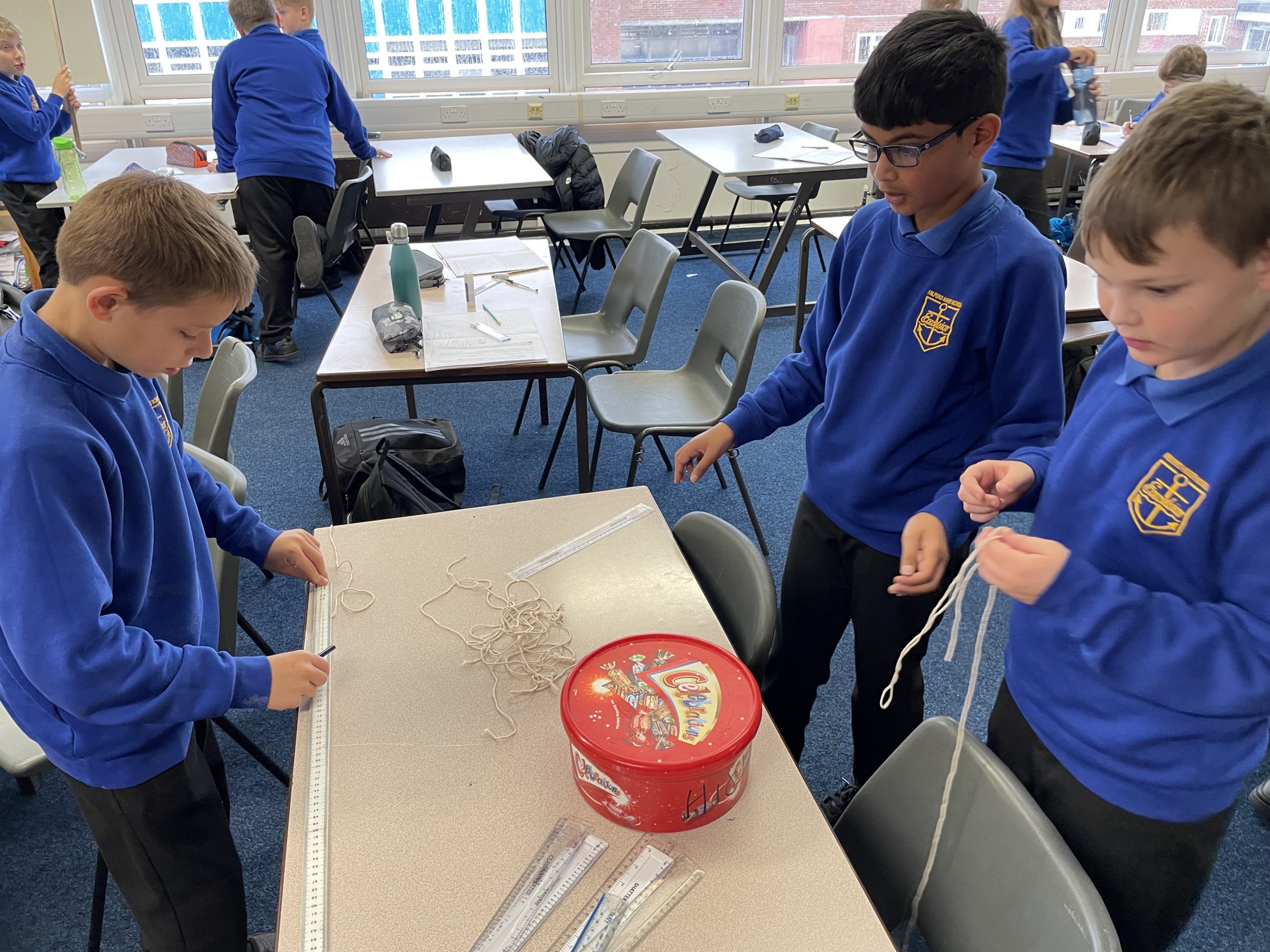
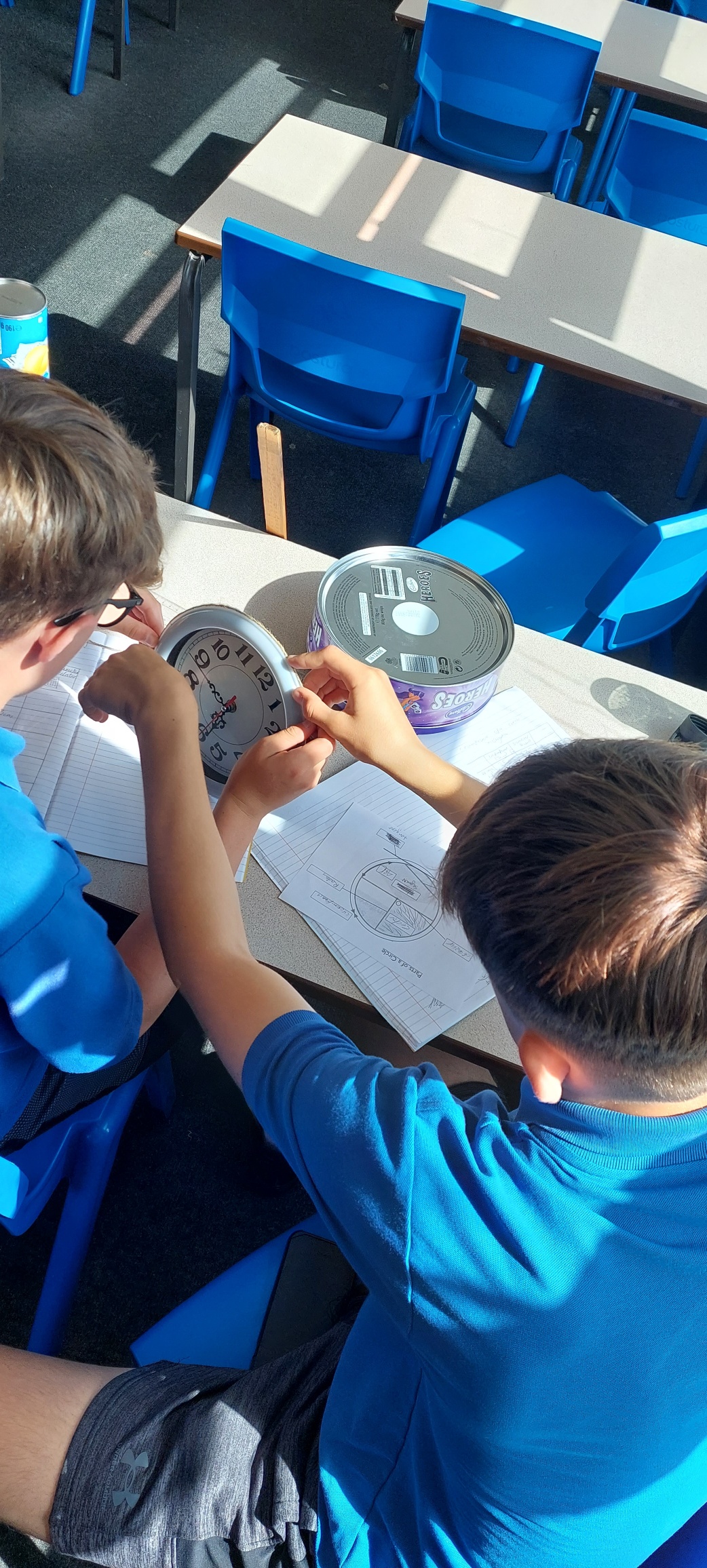
Geometry involves playing with, manipulating, comparing, naming and classifying shapes and structures. The study of geometry encourages the development and use of conjecture, deductive reasoning and proof. Measurement allows the magnitude of spatial and abstract features to be quantified, using a variety of standard and non-standard units. It can also support the development of numerical reasoning.

Reasoning about the sizes and properties of shapes and their surrounding spaces helps learners to make sense of the physical world and the world of mathematical shapes. Geometry and measurement have applications in many fields, including art, construction, science and technology, engineering, and astronomy.

Statistics

Statistics is the practice of collecting, manipulating and analysing data, allowing representation and generalisation of information. Probability is the mathematical study of chance, enabling predictions of the likelihood of events occurring. Statistics and probability rely on the application and manipulation of number and algebra.

Managing data and representing information effectively provide learners with the means to test hypotheses, draw conclusions and make predictions. The process of reasoning with statistics and probability, and evaluating their reliability, develops critical thinking and analytical skills that are fundamental to enabling learners to make ethical and informed decisions.
Key Stage 3

For Mathematics & Numeracy, in years 7, 8 & 9, targeted schemes of learning have been developed by the AOLE that best support the learning journey for the pupils at Milford Haven School, which underpins of the all strands and elements included in the National Numeracy Framework. Pupils are measured against the Progression steps as mapped in the Curriculum for Wales.

Learners are encouraged to develop their mathematical reasoning and thinking skills through rich tasks and real-life contextual problems. Over the course of the year, learners will be given the opportunity to participate in a number of nationally recognised Mathematical challenges, including the United Kingdom Mathematics Trust Challenge. Twice during the year learners will sit the National Numeracy Tests. 

 
Learners in Year 9 will also be taught and entered for the TLM Certificate in Finance GCSE qualification.

Equipment Checklist

  • Blue or Black pen
  • Pencil
  • Rubber
  • Sharpener
  • Ruler
  • Compass
  • Protractor (360° is preferable)
  • Scientific Calculator 

Key Stage 4 Maths & Numeracy

For Mathematics & Numeracy, Years 10 and 11 follow the WJEC Mathematics and Numeracy Double Award GCSE specification. Through this programme of study, the learners are able to adapt the skills learnt to solve “real-life” problems and improve their understanding of more technical mathematical study.
All pupils will sit the Double Award Mathematics & Numeracy GCSE at one of three tiers of entry:
Higher Tier: Grades A* – D
Foundation Tier: Grades C – G

Learners may be entered at different tiers across units.
 
This is a unitised qualification, made up of three papers. 
Unit 1: Financial Mathematics and Other Applications of Numeracy (Calculator allowed) – 30% of qualification
Higher Tier: 1 hour 45 minutes (80 marks) Foundation Tier: 1 hour 30 minutes (65 marks) 
The purpose of this unit is to: 
• introduce and develop learners’ understanding of topics and concepts relating to finance and to develop their financial literacy 
• allow learners to use their knowledge and apply mathematical methods to personal and other real-world contexts, including those related to money and the workplace.  
Calculators will be allowed in this examination.
 
Unit 2: Non-calculator Maths – 30% of qualification
Higher Tier: 1 hour 45 minutes (80 marks) Foundation Tier: 1 hour 30 minutes (65 marks) 
The purpose of this unit is to explore mathematical topics and concepts that don’t require the use of a calculator.  This unit contains all aspects of probability and has a significant focus on geometry. 
Calculators will not be allowed in this examination. 
 
Unit 3: Calculator-allowed Maths – 40% of qualification
Higher Tier: 2 hours (90 marks) Foundation Tier: 1 hour 45 minutes (75 marks)  
The purpose of this unit is to explore topics and concepts that: 
• are more appropriately assessed with a calculator, or 
• form the foundations for, or link to, topics that are more appropriately assessed with a calculator. 
This unit contains the majority of topics covering the data handling aspects of statistics and has a significant focus on measures. 
Calculators will be allowed in this examination. 


Additional Maths

The Maths & Numeracy offer the Level 2 Additional Mathematics qualification as an ‘option subject’ or by completing this independently around lessons, with teacher support during break times. This is a unitised qualification and it is not tiered. 
To be awarded the qualification, learners must complete three units: 
• two mandatory units 
• one optional unit. 
 
Mandatory units:
Unit 1: Algebra Written examination: 50 minutes   (33⅓% of qualification ). A calculator will not be allowed in this paper.
Unit 2: Calculus Written examination: 50 minutes   33⅓% of qualification . A calculator will be allowed in this paper.
 
Optional units: Two units will be taught and examined, with one of these results used in the final Level 2 Additional Maths qualification.
Unit 4: Statistics Written examination: 50 minutes   33⅓% of qualification . A calculator will be allowed in this paper.
Unit 5: Mechanics Written examination: 50 minutes   33⅓% of qualification . A calculator will be allowed in this paper.


Useful Revision Websites recommended by the department

Meet the Team

Mrs E Kedward
Director of Maths Numeracy

Mr S McCarthy
Deputy Director

Mr A Dickinson
Teacher

Mr T Carew
Teacher

Mr D Hart

Mrs A Kelso

Mrs K Stacey
Teacher

Mrs A Sanderson
Maths & Numeracy TA